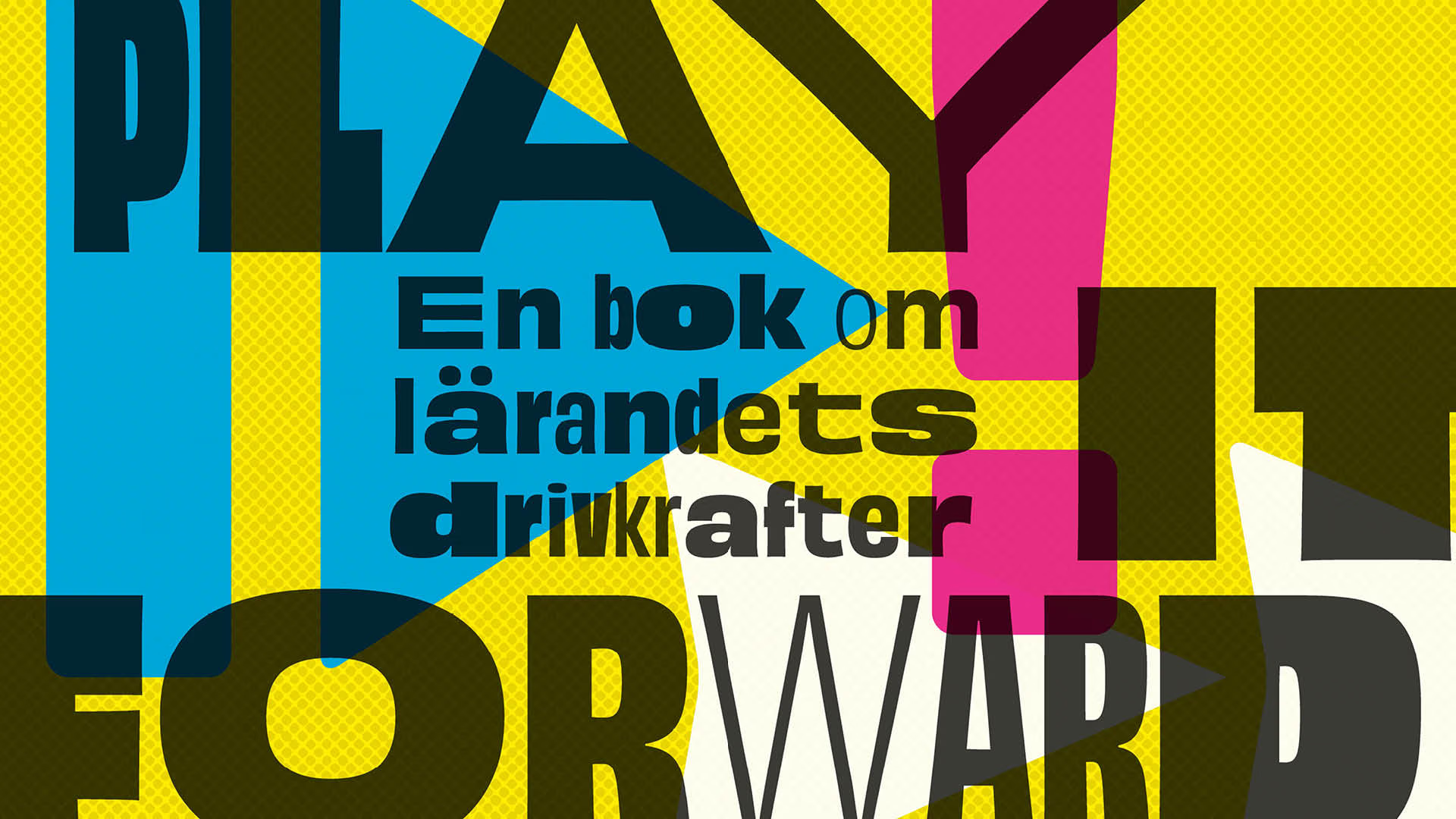


We met with Katarina Pietrzak to discuss the future of workforce development, the importance of playfulness in working life, and why the term “futurist” may have almost outlived its usefulness. After six years in the Swedish government’s collaboration program for lifelong learning, a major research project at RISE (Research Institutes of Sweden), and the publication of her book Play It Forward, she has a clear view of why our current systems are beginning to crack under pressure.

The great shift in a changing world
Katarina, you often talk about the fact that we are in the middle of a major systemic shift. What is actually happening to the way we view knowledge today?
- We live in an extremely dynamic and complex reality where it is almost impossible to know what lies around the corner. I know futurists who no longer want to call themselves futurists simply because change is happening so quickly that no one can predict the next step. Yet in the midst of all this, we still tend to treat learning as a transactional process: ‘I have knowledge, I give it to you as a gift, and now I expect that you have learned something.’ This transmission-based approach to education stems from old power institutions such as the church and the state. It no longer works. If we simply send employees to isolated training sessions and courses to learn the latest tool, that knowledge is often outdated by the time they finish.
You also argue that AI is forcing this transition.
- Yes, very much so. In recent years, there has been enormous concern about ‘cheating,’ particularly in schools, because AI can generate finished assignments and texts in seconds. But that fear only exists because we have decided that the end result—the finished product—is the only thing of value. And it no longer holds the same value when technology can create it for us. Last year, when we conducted a preliminary study on AI-related competency needs, we quickly realized that the most important thing was not learning the technical craft or writing the perfect prompts. It was learning how to be human in this era. We need to shift our focus from outcomes to the process itself. Machines can generate information, but they cannot replace human exploration, curiosity, and collective reflection.
The four universal drivers behind lifelong learning
In your research, you identified four specific drivers that support lifelong learning. What are they?
- Our research team analyzed enormous amounts of data, including material from the major longitudinal Betula study in Umeå, to understand what actually sparks learning and sustains it over time. We identified four fundamental conditions: curiosity, intrinsic motivation, recalling, and psychological safety.
The first, curiosity, is a biological impulse. The brain works in such a way that the more we feed curiosity, the more it grows. We also see that students’ desire to learn—which is essentially a measure of curiosity—declines as they progress through school.
This brings us to the second driver: intrinsic motivation. We have designed far too much education around carrots and sticks—‘do this or you’ll get a lower salary,’ or ‘do this and you’ll get promoted.’ The paradox is that if we push too hard on rewards or punishments, we actually destroy intrinsic motivation.
The more we tell children—or employees—that they must accomplish a specific thing in order not to fail, the more we suppress their inner drive. In a society where everyone needs to keep learning continuously, that is devastating.
The third condition for learning is what is known as recalling. In our project, we often joked that recalling deserved the title ‘the mother of knowledge’ more than repetition does, even though repetition is usually what people refer to. Retrieval means actively bringing forward what you already know and attaching new information to it. When we do that, neural connections are strengthened, and we actually free up working memory so that the brain can absorb even more information. The final, and perhaps most fundamental condition, is psychological safety. From a biochemical perspective, the brain begins to release substances that block learning when we become too anxious or stressed. It must be safe to make mistakes; otherwise, we will not dare to explore.
Serious playfulness and everyday practices
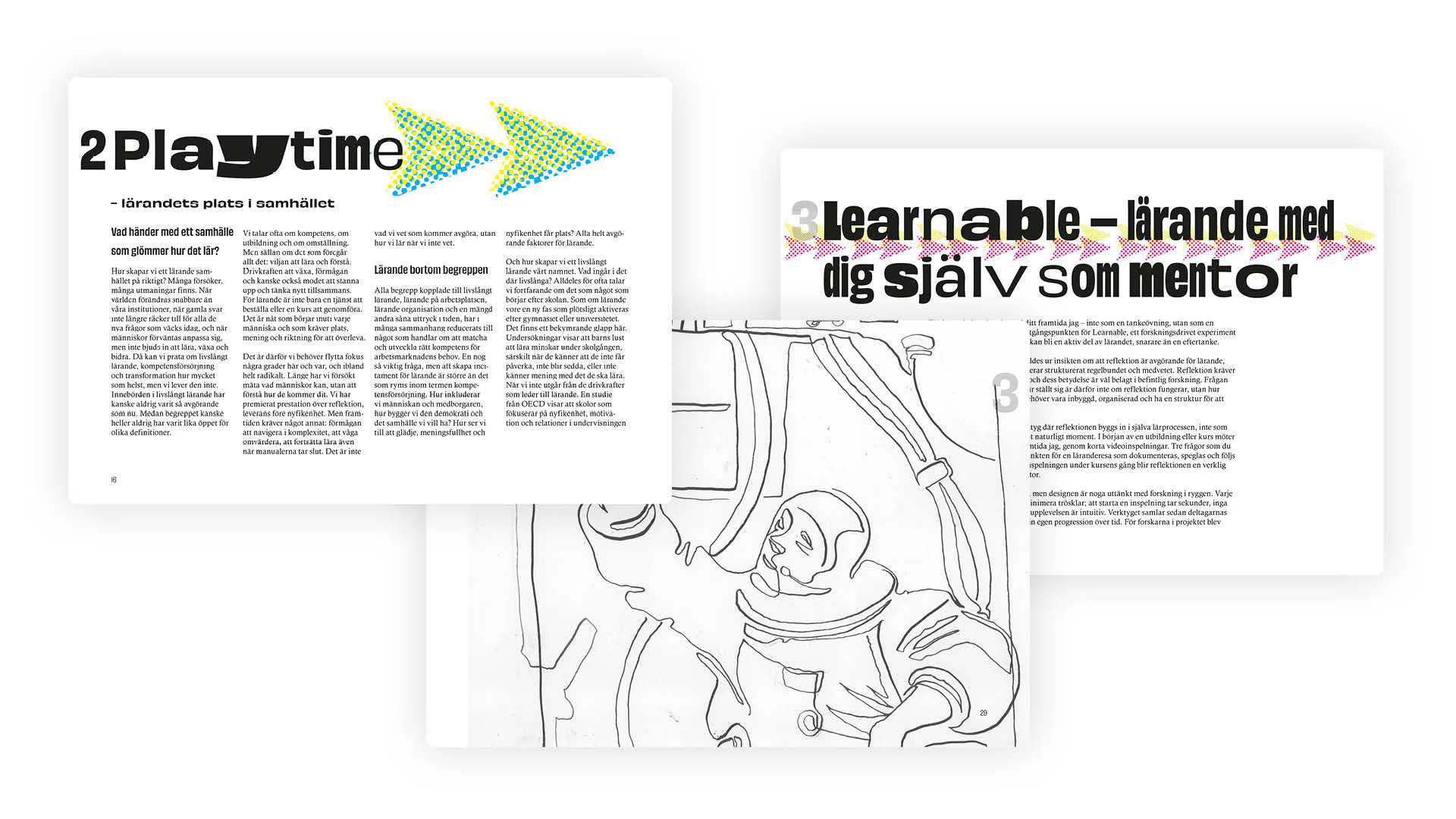
Your book carries the subtitle A Playbook for the Drivers of Learning and frequently references play. Why is play so important for adults in the workplace?
- Many people stop playing while they are still children because they want to seem tough or cool, which I find deeply depressing. But from a neurobiological perspective, play and learning are closely connected. Of course, this does not mean that we should spend our days engaging in silly games at work—we often talk about serious playfulness. It is about creating an experimental environment that sparks engagement and enthusiasm. In our project, we tested a self-reflection method in which participants recorded short videos of their own thoughts before, during, and after a course, answering a number of learning-related questions. They became their own mentors. It felt uncomfortable for many people at first, but when they looked back at their own reflections, we saw a dramatic increase in both motivation and engagement.
Learning is not an issue for each individual to solve alone. It is something collective that we carry together.
If you are a leader or HR professional who wants to improve the learning climate in your organization, where should you start?
- You have to start small; otherwise, the challenge becomes overwhelming. The entire system is pushing in a different direction and would need to change. Ultimately, it is a matter of design. My very best advice is to start making the informal learning that already takes place in the workplace visible. It happens in conversations by the coffee machine, in spontaneous hallway meetings, or when someone asks a colleague for help. That is where real learning takes place, yet we never schedule it and rarely value it in our time reporting. Create breathing room in the system. Redesign weekly meetings so they are not only about status updates. Set aside ten minutes to ask: ‘What happened last month? What mistakes did we make? What can we bring forward and learn from together?’ If we can shift our mindset in that direction, we will have laid the foundation for an organization that is genuinely prepared for the future.
In this post
The complete solution for impactful learning
See how Learnifier can help you align learning with your business goals and understand how your people learn best.

Curious about course creation?
Try Learnifier for free and start building your own courses today.
Explore Learnifier in action
Try our intuitive, user-friendly platform for onboarding, training, and knowledge sharing.
.webp)
Build scalable onboarding
that works
Create engaging programs that deliver results – with less manual work.
Simplify compliance management
Create certification programs, automate follow-ups and reporting – all in one platform.