

The challenge: heavy and inaccessible training
Before KA made the shift to digital learning, the reality was quite different. Church custodians, cemetery workers, and crematorium staff were trained through correspondence courses – a system Ingrid describes as "much more cumbersome." Participants are scattered throughout Norway, making it costly and logistically demanding to gather them for in-person courses.
The need was clear: training that was accessible, flexible, and tailored to the daily lives of these professions.
The solution: six modules built for real life
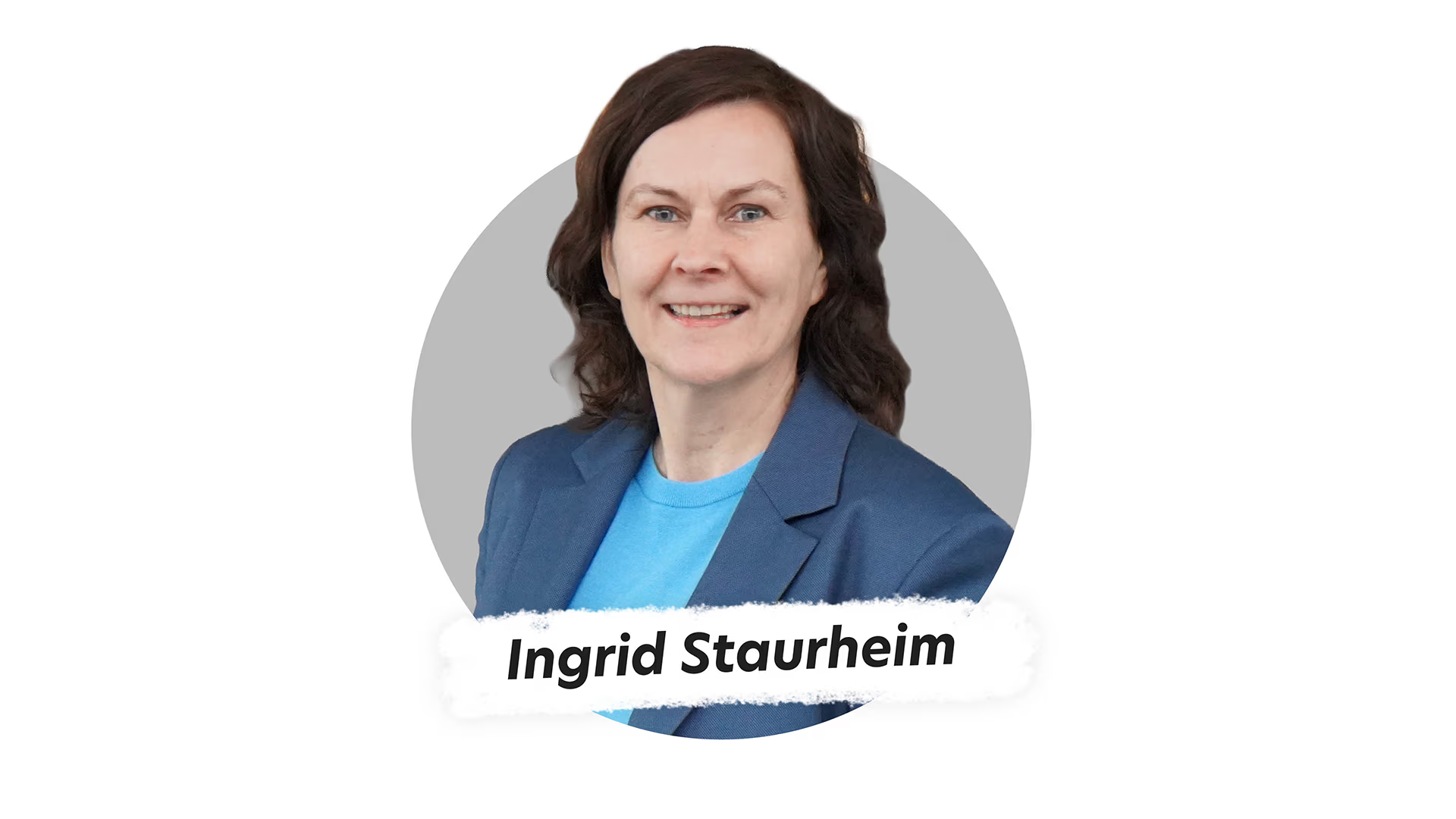
Working with Learnifier, Ingrid and her team developed the Church Custodian School – six modules that participants complete entirely at their own pace. The courses cover everything from the church building as a workplace and its history, to cleaning and care of objects, operations and maintenance, fire safety, and perhaps the most unique topic: meeting people in situations of grief. Each module is structured with clear progression – participants work through the content, answer quiz questions, and unlock the next section. Once a module is completed, they download their diploma and register for the next one. Video clips play a central role, especially for demonstrating practical skills that are difficult to explain through text alone.
"It's incredibly useful because it's not easy to explain in words how to work with audio and lighting equipment and such things, but it's very easy to show on film."
The results: better-prepared participants and more valuable course days
One of the clearest results emerged in connection with the foundation course for new church wardens in March. Before the in-person gathering, the team created a digital pre-course – and the effect was immediate.
Colleagues who participated in the digital material found they got more value from the in-person program because they didn't have to spend time explaining basic concepts and regulations. When participants arrived at the gathering, they already recognized the instructors – creating a completely different starting point.
"Then you don't start completely from scratch, and the participants are mentally prepared for what they're going to experience."
The digital pre-course also ensured that all participants arrived at roughly the same knowledge level, allowing the in-person gathering to dive into deeper discussions from day one
From theory to professional identity
Ingrid highlights an effect that extends beyond learning itself. The Church Custodian School was previously heavy on theory and difficult to complete. With Learnifier, it became something entirely different – tailored to the everyday lives of those who actually use the knowledge.
"I hope that church custodians feel they've received professional training through this. They work on a staff with many others who have their own professional qualifications, and that means something."
Advice for Other Organizations
Ingrid's tips for others looking to improve their training efforts:
- Combine digital and in-person. A digital pre-course makes the in-person gathering far more effective – and more engaging for everyone involved.
- Be clear about time commitment and purpose. Not everyone is used to preparing digitally. Clearly communicate how long the pre-course takes and why it's worth it.
- Keep the pre-course appropriately sized. It should prepare, not overwhelm.
KA is the employer organization for church activities in Norway and works to develop competence in a sector that meets people in all phases of life.
In this post
The complete solution for impactful learning
See how Learnifier can help you align learning with your business goals and understand how your people learn best.

Curious about course creation?
Try Learnifier for free and start building your own courses today.
Explore Learnifier in action
Try our intuitive, user-friendly platform for onboarding, training, and knowledge sharing.
.webp)
Build scalable onboarding
that works
Create engaging programs that deliver results – with less manual work.
Simplify compliance management
Create certification programs, automate follow-ups and reporting – all in one platform.