
.webp)

What is employee onboarding?
Employee onboarding is the strategic process of welcoming and integrating new employees into your organization. It includes everything from preboarding communications to role-specific training, culture immersion, and performance check-ins, often spanning the first 90 days or more.
7 steps to implement an effective onboarding process
1. Set a clear onboarding goal
Start with clarity: What do you want your onboarding to achieve? Define success in terms of knowledge, skills, behaviors, and culture. Consider how new hires should feel, what they should know, and what they should be able to do after 30, 60, and 90 days. A well-designed onboarding process can help new hires reach full productivity 34% faster and increase the likelihood they’ll stay with the company long term.

2. Use what you already have
There’s no need to build everything from scratch. Use existing training materials, intro videos, or process documents as your foundation. Start small and iterate. The most effective onboarding programs evolve over time based on feedback and data.
3. Define what to digitize and what to keep in-person
Blended learning, combining online and in-person experiences, is ideal for modern onboarding. It creates flexibility for learners while preserving valuable human connection. Digitize preboarding elements like welcome videos, org charts, and tool tutorials. Keep personal moments like team introductions, mentoring, and cultural immersion live.
4. Choose the right tools
A strong onboarding platform can automate repetitive tasks and create a seamless experience. Look for tools that support:
- Multimedia content (video, text, quizzes)
- Mobile-friendly access
- Personalized learning paths
- Automatic reminders and task tracking
This not only saves time but ensures consistency across departments and locations.
5. Design the onboarding journey
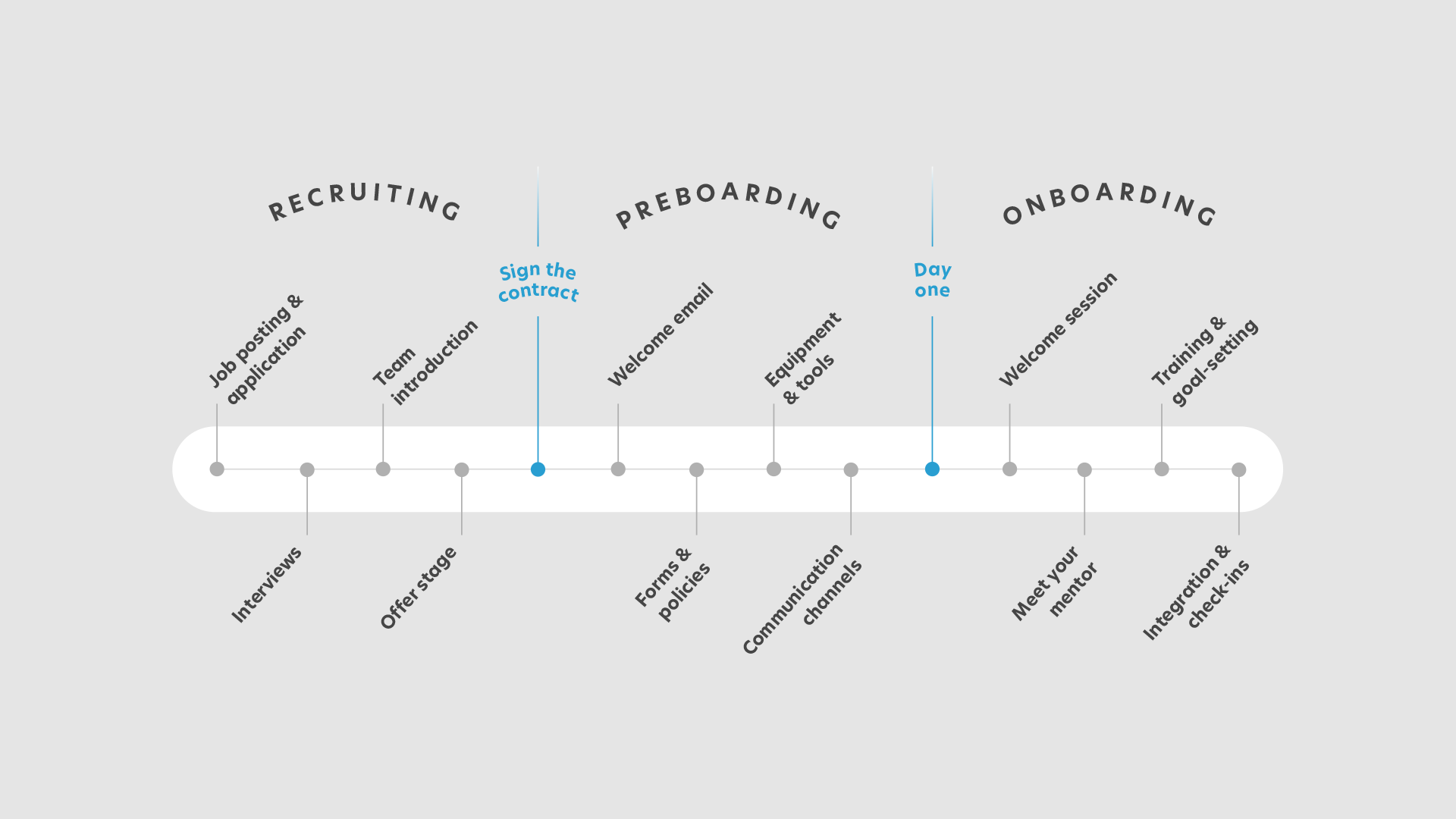
Structure the onboarding process into clear phases:
- Preboarding (Before Day 1): Send a welcome email, intro videos, team bios, and practical info
- Week 1: Focus on culture, tools, and setting expectations
- Weeks 2–4: Begin role-specific training, shadowing, and early tasks
- First 90 Days: Schedule regular check-ins, feedback loops, and continued learning
Mapping out the journey reduces overwhelm and ensures nothing gets missed.
6. Create relevant and engaging content
Mix formats like explainer videos, quick-reference PDFs, and interactive quizzes to keep engagement high. New hires absorb information differently, so offering content in multiple formats is key. Also, don’t underestimate the value of social integration: informal moments like lunch chats, coffee breaks, or group Slack channels help build relationships and confidence faster.
7. Launch fast then improve continuously
Avoid waiting for perfection. Launch your onboarding program with a minimum viable structure and build on it over time. Use surveys, feedback sessions, and performance data to refine the process. Working in iterations lets you stay agile and responsive to changing employee needs, tools, or organizational goals.
Want to go deeper?
If you’re ready to build a future-proof onboarding experience, we’ve compiled everything you need in one practical resource. Download our complete onboarding guide to get actionable tips, real-world examples, and templates to kickstart your program.
Die Komplettlösung für wirkungsvolles Lernen
Erfahren Sie, wie Learnifier Sie dabei unterstützt, Lernen an Ihren Unternehmenszielen auszurichten und besser zu verstehen, wie Ihre Mitarbeitenden am effektivsten lernen.

Neugierig auf die Kurserstellung?
Testen Sie Learnifier kostenlos und beginnen Sie noch heute mit der Erstellung Ihrer eigenen Kurse.
Entdecken Sie Learnifier in der Praxis
Testen Sie unsere intuitive, benutzerfreundliche Plattform für Onboarding, Training und Wissensaustausch.
.webp)
Skalierbares Onboarding, das funktioniert
Erstellen Sie ansprechende Programme, die Ergebnisse liefern – bei weniger manuellem Aufwand.
Compliance-Management vereinfachen
Erstellen Sie Zertifizierungsprogramme und automatisieren Sie Nachverfolgung und Reporting – alles in einer Plattform.